The world recently celebrated the successful return of NASA astronauts Sunita Williams and Butch Wilmore, who spent nine months aboard the International Space Station (ISS). Life in space is vastly different from the comforts of Earth, and one of the most fundamental challenges astronauts face is maintaining proper nutrition.
Do you know? Astronauts require 2,500 to 3,800 calories per day depending on their workload. Interestingly, their calorie needs in space are often higher than on Earth.
Why Space Food Is Essential for Astronaut Health
Astronauts rely on meticulously designed meals to sustain their health and energy. Proper nutrition is essential to ensure physical strength, cognitive function, and endurance in the harsh space environment. Without a balanced diet, they risk muscle loss, weakened bones, and impaired concentration—all significant concerns during long-term missions.
But how different is space food from what we enjoy on Earth? And how do astronauts eat in zero gravity without crumbs floating around? Let’s explore the fascinating innovations behind space food.
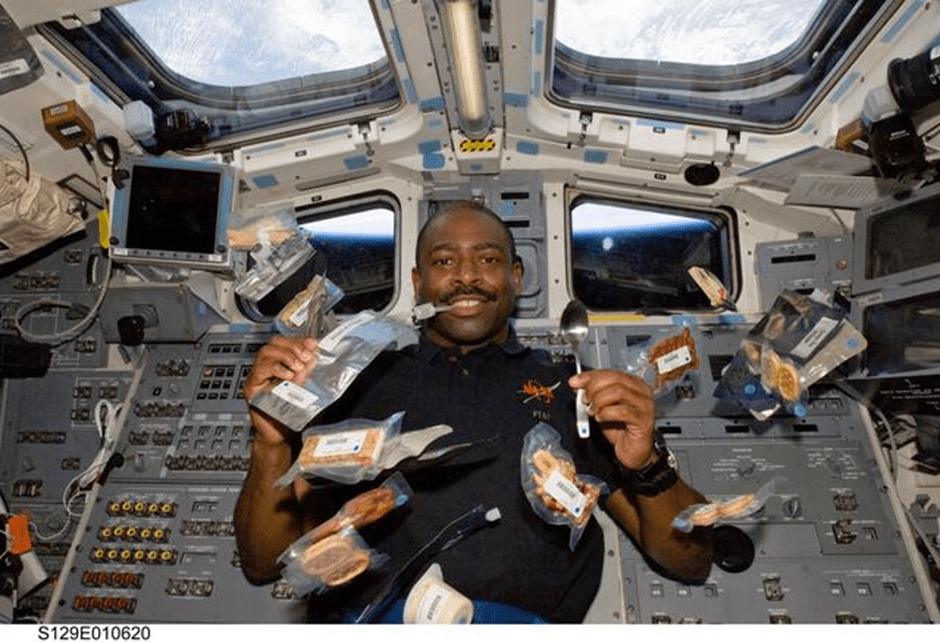
Image: Mission Specialist Leland Melvin shares the shuttle Atlantis Flight Deck with floating food and drink packets, making mealtime a zero-gravity adventure. (Image credit: NASA)
The Evolution of Space Food Technology
Back in the 1960s, astronauts’ meals consisted of applesauce squeezed from tubes and bite-sized cubes. Early space food was often freeze-dried and rehydrated with water—not the most appetizing or convenient experience. Over time, advancements in food science led to the development of more diverse, nutritious, and palatable options.
Fun Fact: In 1962, John Glenn became the first American to eat in space, consuming applesauce from an aluminium tube!
Today, astronauts enjoy a variety of meals that replicate familiar flavors from home, ranging from pasta and seafood to desserts. Every meal undergoes rigorous testing to ensure it meets safety, nutritional, and storage requirements.
For a deeper dive into the history and evolution of space food, check out this informative video: https://www.youtube.com/watch?v=ssm7Q7SUHbY
Types of Space Foods
There are various types of space food. These can be typically categorised into broad three groups:
- Rehydratable Food: Meals like soups, scrambled eggs, and pasta are freeze-dried to remove water, making them lightweight and shelf-stable. Astronauts simply add water to restore their original texture and flavour.
- Thermostabilized Food: Heat-treated and sealed to prevent spoilage, these ready-to-eat meals include dishes like stews, fruits, and desserts. They do not require refrigeration or additional preparation.
- Fresh and Packaged Foods: Occasionally, fresh fruits and vegetables are delivered via resupply missions, offering astronauts a refreshing taste of Earth.
These innovations also allow for customized meal plans, catering to astronauts’ specific dietary preferences and nutritional needs.
To learn more about NASA’s Space Food Systems Laboratory and their role in developing these meals, watch the following video: https://www.youtube.com/watch?v=FcMeRkEw9-0
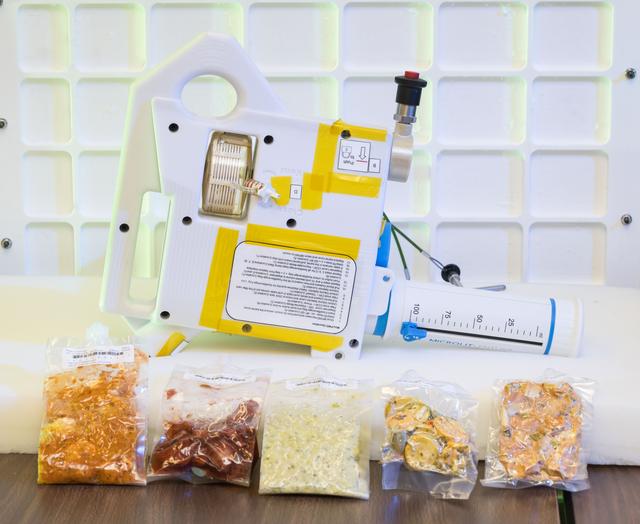
Image: Prototype of the Mini Portable Water Dispenser with food pouches on display during a demonstration at NASA’s Johnson Space Center. (Image Credit: NASA/David DeHoyos)
The Challenge of Eating in Zero Gravity
Imagine floating in microgravity, reaching for a meal, only to have your food drift away before you can take a bite. In space, even the simple act of eating becomes a challenge.
Eating in microgravity presents unique challenges. Without gravity, crumbs and droplets can float around, posing risks to both equipment and astronauts. To prevent hazards, space food is carefully packaged in sealed containers, pouches, or tubes with one-way valves. Astronauts often use scissors to open pouches, and meals are eaten with specially designed utensils. Even beverages are consumed using vacuum-sealed bags with straws.
Did You Know? Salt and pepper in space come in liquid form to prevent granules from floating away!
On special occasions, NASA also sends festive meals to celebrate holidays, like Thanksgiving turkey or Christmas cookies, helping astronauts feel connected to home.
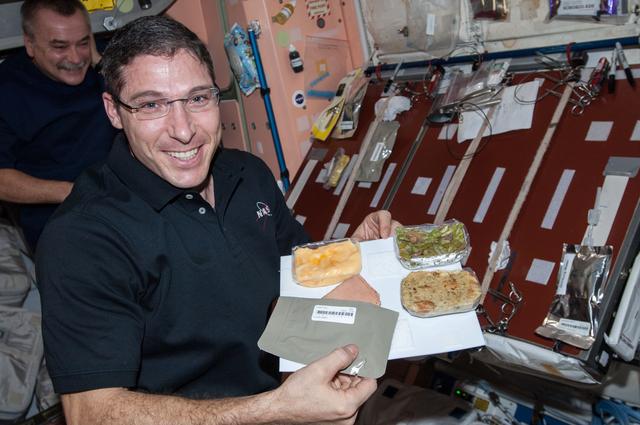
Image: NASA astronaut Michael Hopkins enjoying his Thanksgiving meal in the International Space Station. (Image Credit: NASA)
Balancing Nutrition: Vitamins, Minerals, and Calories
Space travel causes astronauts to experience muscle loss, bone density reduction, and radiation exposure. To counteract these effects, their meals are fortified with:
- Calcium and Vitamin D: For maintaining bone strength.
- Protein: To prevent muscle atrophy.
- Antioxidants (Vitamins C & E): To combat oxidative stress caused by radiation.
- Iron and Vitamin B12: For blood health and energy levels.
- Omega-3 Fatty Acids and Magnesium: Supporting cognitive function and reducing stress.
These carefully calibrated diets ensure astronauts remain physically and mentally fit throughout their missions.
Future Innovations: 3D-Printed Food and Beyond
To sustain astronauts on even longer journeys, NASA is exploring cutting-edge food technologies:
- 3D-Printed Food: Using edible pastes and powders, printers can create personalized meals tailored to astronauts’ nutritional needs. NASA has partnered with companies like BeeHex to explore the possibility of 3D-printed pizza in space.
- Hydroponics and Space Farming: Plants like lettuce, radishes, and wheat are grown using hydroponic systems aboard the ISS. Fresh produce provides vital nutrients and enhances psychological well-being.
- Lab-Grown Meat: Cellular agriculture enables the production of meat without livestock, offering a sustainable protein source.
- Smart Nutrition Monitoring: Wearable sensors and AI systems monitor astronauts’ health, recommending dietary adjustments as needed.
These innovations not only make deep space missions feasible but also offer potential solutions to food security challenges on Earth.
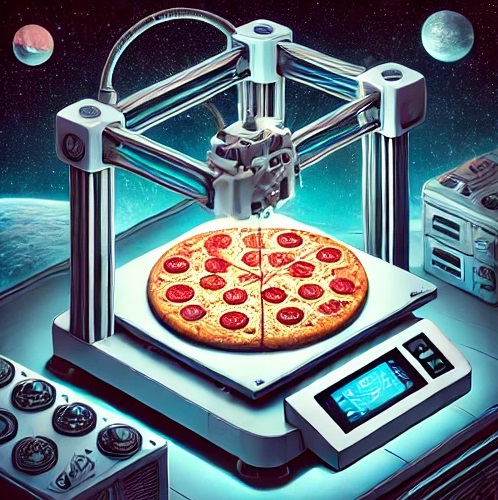
Image: A futuristic illustration depicting 3-D printing of pizza in zero gravity. (Image Credit: Generative AI)
Final Thoughts
Space food has come a long way from squeeze tubes and sugar tablets. Today, astronauts enjoy a diverse menu designed to keep them strong, focused, and connected to home. As space exploration advances, so will the ways we nourish astronauts on their journeys to the Moon, Mars, and beyond.
Would you be willing to try a 3D-printed space pizza or experience the taste of lab-grown meat? The future of food is already here—and it’s out of this world!
To explore more about the space food nutrition and technology advancements, consider going through these publications:
https://www.sciencedirect.com/science/article/abs/pii/S2214552422000736
https://pmc.ncbi.nlm.nih.gov/articles/PMC10740090/
https://www.sciencedirect.com/science/article/abs/pii/S2214552423000603

 Science Edge Zone
Leave a comment